
Engineering connects disciplines
Energaia Institut is the engineering layer that connects mechanical engineering, physics and biology with AI, neural networks and image recognition. We deliver interdisciplinary R&D, public funding strategy, and Digital Twin modelling.
The right instrument for every phase
Innovation needs funding — and funding needs the right instrument for the right project phase. We work across Bavarian state programmes and federal BMWi measures, from the Digitalbonus.Bayern to federal R&D incentives, and match each one to the right consortium, the right phase and the right cost category.
Digitalbonus.Bayern
Bavarian digitisation grant for SMEs — reimburses software, hardware and process-control investments that bring Bavarian industry into data-driven operations.
Bavarian R&D grants
Project funding from the Bavarian State Ministry of Economic Affairs, Landesentwicklung und Energie for applied research clusters, prototypes and technology transfer.
BMWi / BMWK instruments
Federal non-dilutive programmes covering energy, deep tech and SME innovation — secured through structured proposals and reporting.



Logos shown for attribution only; Energaia Institut is an independent engineering and funding-strategy partner, not an agency of the State of Bavaria or the Federal Government.
8 approvals. €15M+ in project value.
Since 2025 we've secured 8 Forschungszulage approvals — Germany's research allowance tax incentive — unlocking over €15M in eligible project value across deep tech, energy, AI, and robotics & automation.
AI-optimised IP filing
IPVX is our internal intellectual-property workflow engine, built with GEMINO AI. It streamlines patent, trademark and design filing — from prior-art triage to EUIPO SME Fund co-funding applications — so our clients file faster, with fewer rejections and a higher grant-capture rate.
Prior-art triage
GEMINO AI ranks prior art and freedom-to-operate signals before an application is drafted, cutting wasted filings.
Filing automation
Application forms, classification and evidence packets are assembled automatically from project metadata.
SME Fund capture
IPVX tracks EUIPO SME Fund voucher windows and submits co-funding claims on our clients' behalf.
Upcoming funding calls
We connect research and industry partners to live European funding calls. Explore what's open right now and reach out to join a consortium before the deadline.
- Deadline
- 10 Sep 2026, 14:00 CET
- Budget
- ~€1.5M avg per project
SME-led, ≥2 partners from ≥2 Eurostars countries. DE, FR, ES, PT, Canada all eligible.
- Deadline
- 15 Sep 2026, 17:00 Brussels
- Budget
- €15–25M per project
Decarbonisation of energy-intensive industries (biomass gasification for process heat/H₂ qualifies). Universities eligible as coordinator or partner.
- Deadline
- 16 Sep 2026
- Budget
- up to €2.5M per project at 100% funding
Must build on prior FET/Pathfinder/ERC-PoC or HE/H2020 R&I result. Solo or 2–5 partner consortium.
- Deadline
- Pre-proposal 8 Oct 2026 · Full proposal 11 Mar 2027
- Budget
- €0.5–5M per project (€84M total)
≥3 partners from ≥3 countries. DE + FR + ES + PT all funded via national agencies. Best vehicle for a 4-country university consortium on gasification/biofuels.
- Deadline
- 1 Dec 2026
- Budget
- €40M total (biomass gasification + FT-synthesis)
Transnational pre-commercial procurement for renewable fuel technologies.
- Deadline
- 1 Dec 2026
- Budget
- ~€6.5M per project × 2 projects
Solid biofuel production combined with high-efficiency combined heat and power.
Patent research, simulation and AI pipelines
We pair rigorous patent research with 2D-3D system simulation and AI-driven Unreal and Autodesk integrations — turning process indicators into decisions faster than ever before.
Patent Research
Systematic prior-art and freedom-to-operate analysis across global patent databases, mapping the technical landscape before a single design decision is made.
2D-3D System Simulation
Coupled 2D and 3D simulation of mechanical, thermal and fluid systems, validating designs against real-world physics before prototyping begins.
AI — Unreal & Autodesk Integration
AI models embedded directly into Unreal Engine and Autodesk pipelines to generate live process indicators, cutting iteration time from weeks to hours.
Active research clusters
Three live R&D clusters spanning waste-to-gas, acoustic edge AI and lemna cultivation — each connecting Energaia with scientific and industry partners across disciplines.
Waste-to-gas solutions
Decentralised waste-to-gas process chains — from feedstock conversion through reactor logic to catalytic upgrading.
"Work on MFuel projects focused on decentralised waste-to-gas process chains, covering the conversion of different feedstocks into usable gas and the improvement of gas quality through reactor and catalytic processes. The work supports areas such as gasification, tar reforming, water-shift reactions, methanisation and catalytic upgrading — with the goal of turning waste materials into valuable syngas or methane-based energy products."
- 01Gasification
- 02Tar reforming
- 03Water-shift reactors
- 04Methanisation reactor
- 05Catalytic processes
Energaia Institut
- Fraunhofer IKTSSOFT for syngas applications
- Hochschule Zittau/GörlitzTar reforming
- University of GlasgowCatalysis & reforming chemistry
- TU DelftThermodynamic process modelling
- Monash UniversityAustralia
Acoustic edge AI for maintenance
A KI-XR module combining acoustic process awareness, edge-device AI and Android/XR decision support for condition-based industrial maintenance.
- 01Acoustic process awareness
- 02Machine hearing & bio-inspired processing
- 03Edge-device AI on constrained hardware
- 04Android/XR decision support
- 05Condition-based industrial maintenance
MindWaves AI Solutions
- TU MünchenBio-inspired Information Processing
- TU NürnbergMachine Learning & Positioning Systems
Adaptive lemna cultivation systems
Physics-based modelling and pilot deployment of Lemna cultivation — connecting growth simulation, hydraulic engineering and species-specific parameterisation for both remediation and production biomass streams.
"Currently leading a lemna-cultivation venture. Built a physics-based TypeScript/React/Three.js simulator covering indoor, outdoor and hybrid growth environments with full solar geometry and species-specific parameters. Assembled the build packet for a pilot-scale farm in Bali, spanning CAD drawings, hydraulic calculations and vendor specifications."
- 01Growth-environment simulation (indoor / outdoor / hybrid)
- 02Solar geometry & full-spectrum irradiance modelling
- 03Species-specific Lemna characterisation
- 04Hydraulic & nutrient-flow engineering
- 05Remediation vs production stream separation
- 06Pilot-scale farm deployment
Energaia Institut
- Universitas UdayanaTropical Lemna taxonomy & water-quality dynamics
- TU MünchenBioreactor modelling & growth kinetics
Adaptive lemna cultivation
One of nature's most versatile plants — we build the adaptive system to grow it for the real world: outdoors, in real water and weather, not under lab lights.
Request the technical brief01 / The gap
Almost everything we know about lemna, we learned indoors.
A plant that has to perform in the real world meets real water, real weather, and real systems. We're built for that gap — not to dismiss the lab, but to complete it.
Lab — what it can do
Controlled. Small-sample. Indoors. Clean light, clean water, short runs — much of it under artificial lighting that costs more than the crop can return at scale. Essential science, but a different question from deployment.
Field — what it will do here
This water. This sky. This scale. Real conditions, and sunlight that's free. The answers diverge from the lab — and that divergence is exactly what the system is built to learn.
The lab controls every variable, at a cost. We learn from the world as it is, and design for it.
03 / How the system thinks
One loop, not a catalogue of data.
AI proposes; the bench validates.
Responds to water
Different inputs create different questions for treatment, biomass handling, and validation.
Responds to climate
Sized and operated for local light, weather, and constraints.
Responds to end-use
Downstream choices are separated early so remediation and production routes are never blurred.
The payoff of adapting
We design the outcome in — instead of discovering it after the build.
Cleaner water
Nutrients and contaminants drawn down from real inputs.
Higher-protein biomass
Composition steered toward protein.
Higher starch
Matched to the downstream route — without trading away growth.
We read the whole canopy — not a sample of it. Every day the system takes tens of images and reads the tray directly: coverage and colour, measured against the conditions the crop needs.
04 / What we work with
Capabilities, not claims.
Vision, sensing, simulation and harvest concepts — built to fuse live data, not yet a closed loop.
Vision · live tray
Already tells the family apart — classifying fronds by species across a single live frame. The same pipeline is being developed to read growth and stress.
Nutrient dynamics
How nutrients move through a contained system across a growth cycle.
Light & climate modelling
We model the physical environment so each system can be engineered toward its climate.
Concept sketches — the instrumented system
Sensing bar over a single tray
An overhead sensing bar on a rail reading the lemna canopy.
Stacked for density
A multi-tier rack of trays with an overhead camera and circulation pump.
Skimmer-bar harvest
A skimmer bar sweeping lemna across a tray into a harvest windrow.
05 / Where we really are
We are early, and we say so.
The claim is not that we have solved lemna. The claim is that we are building the system that finds the truth faster, in the real world.
Working species-vision detection, a 256-paper knowledge base, and first pilot trials — indoor and outdoor, including pH optimisation.
The instrumented system — sensing, simulation, and harvest concepts designed to fuse live data.
Lipid genomics and recovery — open research questions, nothing wet-lab-validated yet.
06 / Responsible innovation & biosecurity
The firewall is part of the technology.
Biomass that strips metals from dirty water can't also be a clean product. We separate the two routes from the first sensor reading.
Remediation-grade
Non-food, non-feed, by design. Water-treatment biomass is tracked as its own stream — for energy, materials, or disposal. It never crosses into a clean product.
Production-grade
Clean inputs — food and feed on the table. Grown on clean water and steered toward high-protein food or feed, with its own methods, validation, and authorisations.
- ✓Never sell or blend remediation biomass as food or feed.
- ✓No outdoor-release narrative.
- ✓No unproven health or medical claims.
- ✓No unproven performance or nutrition numbers on the public site.
07 / Open questions
The research agenda is the invitation.
We point AI at the indexed literature to find where the science is thin, and fuse sensor data with CAD models to simulate how light reaches a canopy, hour by hour, before anything is built.
Water
How does local water change the system? A partner's contaminants, nutrients, and treatment goals define the experiment.
Lab → field
What survives the move outdoors? The field asks what it does here — under this climate, this water, this constraint.
Composition & the genome
Which levers actually shift what it makes? AI-assisted comparative genomics finds candidates; the bench decides what's real.
Downstream lives
What becomes of the biomass? Non-food biomass has valuable second lives, firewalled from anything clean.
Work with us
The idea is here. The data lives behind a real conversation.
Universities
Research agenda — wet-lab, water, and engineering collaborations around open questions.
Public funding
Governance and TRL — a responsibly scoped approach with a strict firewall between remediation and clean production.
Investors
Optionality and maturity — a compounding data system with both clean and non-food downstream paths, and an honest maturity ledger.
Seraph Engineering, S.L. · Las Palmas de Gran Canaria, Spain. Public content is conceptual and informational; detailed materials shared under confidentiality.
Why engineering must bridge disciplines
The greatest technical challenges of our time — sustainable energy, precision medicine, autonomous systems — cannot be solved within a single discipline. They demand a structured, interdisciplinary engineering approach.
Disciplines work in silos
Mechanical engineers, physicists and biologists rarely share methods or data. Breakthroughs happen at the interfaces — but there is no structured engineering layer to connect them.
One engineering layer
We embed AI, neural networks and image recognition into classical engineering workflows. The result: a single, coherent R&D process that spans domains and accelerates innovation.
Funded, measurable impact
Every project is tied to public funding, clear KPIs and Digital Twin validation. Our clients gain not only technology, but a sustainable competitive advantage backed by evidence.
What we deliver
Six interlocking disciplines. One coherent engineering methodology. Every service feeds into the next, creating a compounding R&D advantage for our clients.
Mechanical Engineering
Structural analysis, FEA simulation and precision component design. We translate physical requirements into manufacturable, validated solutions.
AI & Neural Networks
Custom deep-learning architectures for industrial classification, prediction and anomaly detection — trained on domain-specific data, deployed on edge.
Biology & Physics
From bioreactor modelling to optical sensor calibration, we bring scientific rigour to engineering problems that span disciplines.
Digital Twin Modelling
Physics-informed digital twins for process optimisation, predictive maintenance and lifecycle simulation. Real-time data, reduced downtime.
Public Funding & Grants
End-to-end grant strategy: proposal writing, consortium building, financial planning and reporting for EU, BMBF, BMWi and state programmes.
Image Recognition
Computer-vision pipelines for quality inspection, medical imaging and environmental monitoring. From labelling to production inference.
How we work
A rigorous four-phase methodology that takes projects from initial concept through funded R&D to validated, production-ready technology.
Discovery & Scoping
We map the technical landscape, identify cross-domain synergies and define measurable project objectives with clear deliverables.
Funding Strategy
Grant identification, proposal writing and consortium assembly. We navigate EU, BMBF and BMWi programmes to secure non-dilutive capital.
Interdisciplinary R&D
Engineers, physicists and data scientists work in unified sprints. AI models, physical prototypes and simulations evolve in parallel.
Validation & Scale
Digital Twin verification, field testing and technology transfer. We deliver production-ready systems with documented IP and clear scale-up paths.
Why Energaia
- W.01Domain DepthEngineers with 10+ years in their core discipline, not generalists.
- W.02Funding Track Record€12M+ secured across 30+ funded projects since 2019.
- W.03Structured IPEvery deliverable includes documented intellectual property and clear licensing.
- W.04Network EffectAccess to 40+ research partners, universities and industry consortia.
Industry focus
Our interdisciplinary methodology is sector-agnostic in principle but deeply specialised in execution. Eight verticals where we have proven domain expertise and active projects.
Manufacturing
Process optimisation, quality control and predictive maintenance for discrete and process manufacturing.
Energy
Renewable integration, grid modelling, battery simulation and hydrogen infrastructure engineering.
Environment
Environmental monitoring, biodiversity assessment and carbon lifecycle modelling with AI-driven analytics.
MedTech
Medical device development, imaging pipelines, regulatory strategy and clinical validation support.
Mobility
Autonomous systems, EV drivetrain analysis, sensor fusion and vehicle dynamics simulation.
Built Environment
Smart building systems, structural health monitoring and sustainable construction material analysis.
Chemistry
Reaction modelling, process intensification and AI-driven catalyst screening for chemical R&D.
Aerospace
Lightweight structures, composite analysis, certification support and digital-twin-based fleet management.
SynKero.DT
Synthetic kerosene via Power-to-Liquid — our flagship Digital Twin project connecting reactor engineering, AI-driven catalyst optimisation and full lifecycle assessment.
Application Scope
- 01Reactor geometry & CFD simulation
- 02Catalyst screening via ML
- 03Feedstock flexibility analysis
- 04LCA & techno-economic modelling
- 05Process digital twin (real-time)
- 06Scale-up pathway engineering
The SynKero.DT project demonstrates our core methodology: classical chemical engineering merged with AI-driven optimisation and real-time Digital Twin validation. The result is a scalable, data-driven pathway to sustainable aviation fuel.
Application Facts
- Programme
- BMBF — Hydrogen Innovation
- Duration
- 36 months (2023–2026)
- Consortium
- 4 partners, 2 universities
- TRL Target
- TRL 5 → TRL 7
- Volume
- €3.2M total grant
- Energaia Role
- Digital Twin & AI Lead
Research network
A curated ecosystem of universities, Fraunhofer institutes, and industry partners. Every collaboration is project-driven and IP-structured.
Rudolph
Our internal research coordination platform. Connects project teams, tracks milestones, manages IP documentation and automates consortium reporting across all active R&D programmes.
- 01CoordinationCross-partner milestone tracking
- 02DocumentationStructured IP and deliverables
- 03ReportingAutomated funder reports
Germany
From the field
Technical deep-dives, funding insights and project retrospectives from our engineering and research teams.
View all notes
Energaia Institut secures EUIPO SME Fund co-funding to expand IP
EUIPO SME Fund co-funding awarded to expand our patent, trademark and design portfolio — filed through the IPVX engine built with GEMINO AI.
Read note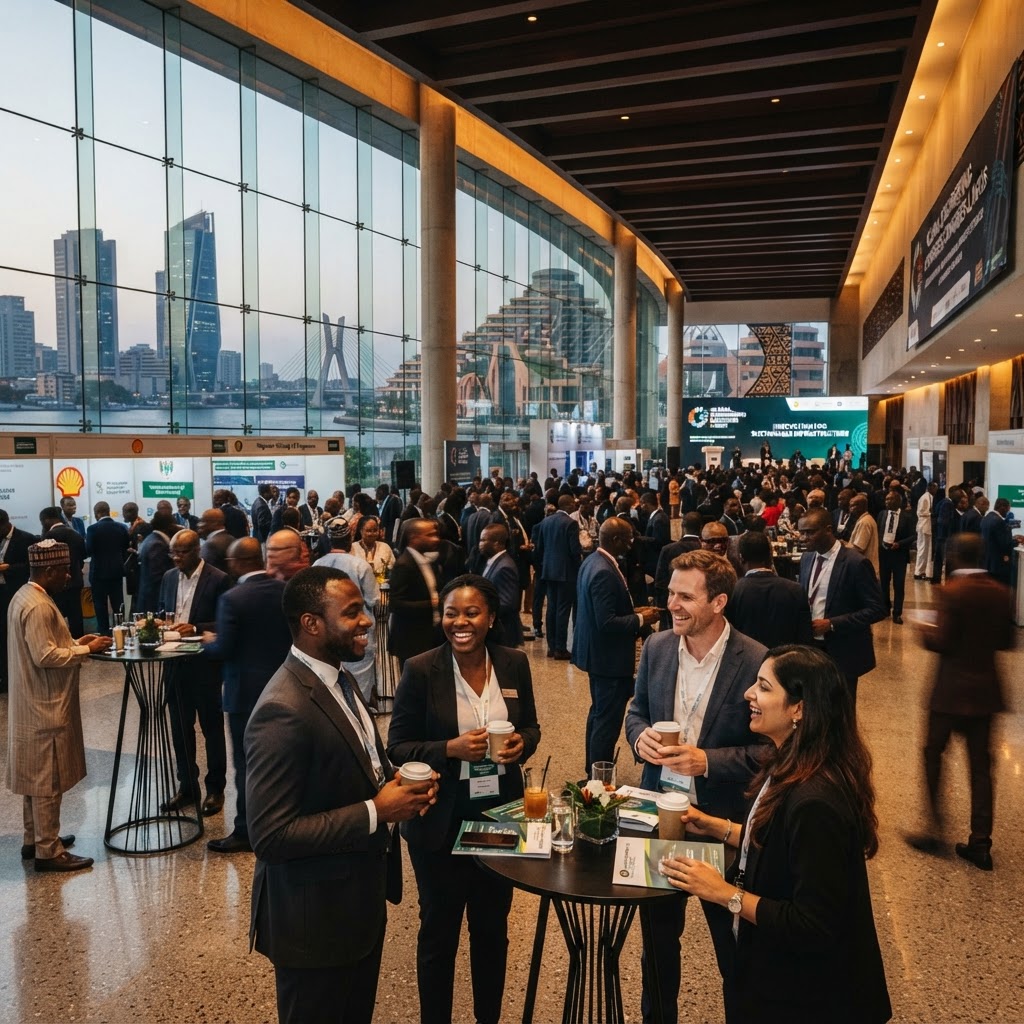
Energaia at EIC Lagos: Fostering Deeper Collaboration with University of Lagos
How our participation at the Engineering Innovation Conference in Lagos is opening new interdisciplinary research corridors with UNILAG.
Read note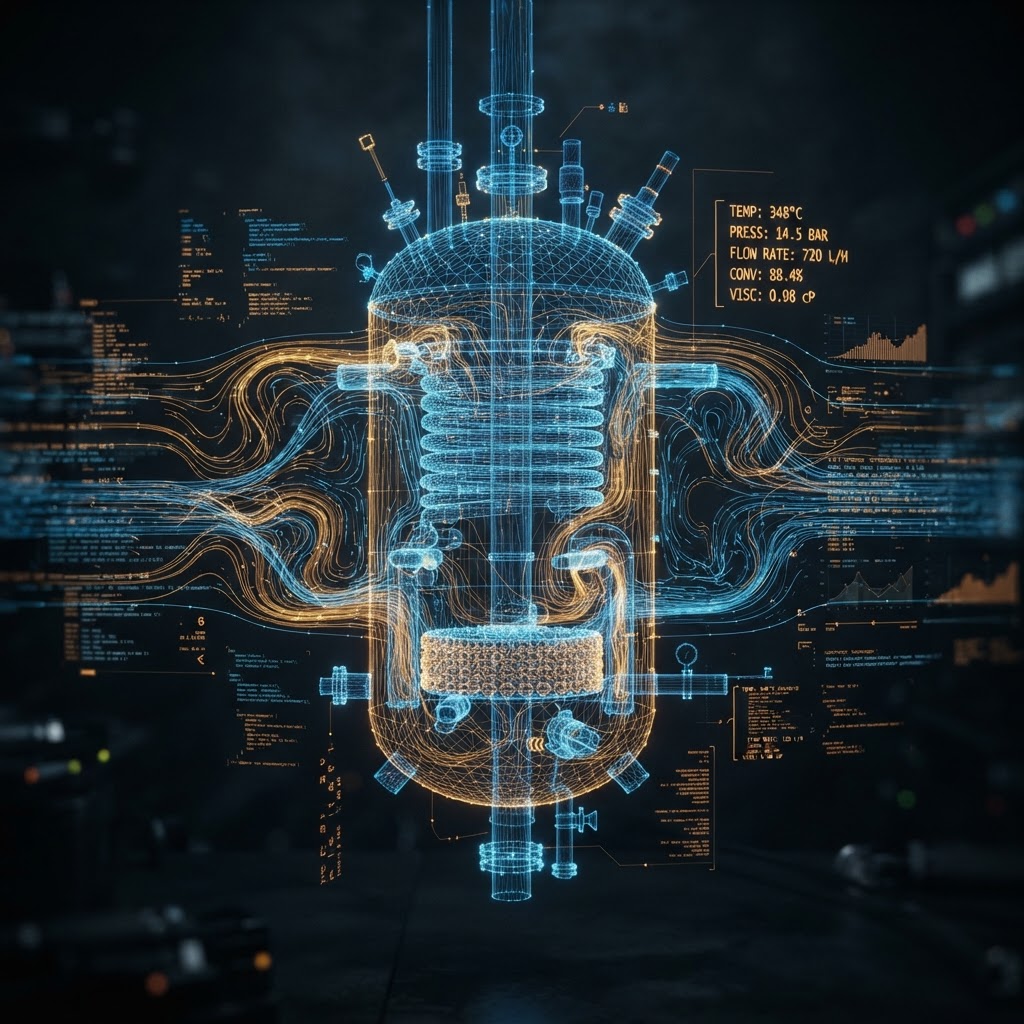
From CFD to Real-Time: Building the SynKero Digital Twin
How we bridged high-fidelity CFD simulation with edge-deployed inference for continuous reactor monitoring.
Read noteLet's build together
Whether you need an R&D partner, a funding strategy, or a Digital Twin — let's start with a conversation about your technical challenge.
Send a message
We respond within two business days.